This post may contain affiliate links, which means I may earn a small commission from purchased products at no additional cost to you.
Table of Contents
There are places that feel historic, and then there are places that feel held. The Clancy House in Kenner belongs firmly in the second category. From the moment I stepped inside, it was clear this was not just a restored home or a repurposed venue. It was a family story still unfolding, layered with memory, responsibility, and care.
Set in historic Rivertown, just beyond the bustle of New Orleans, the Clancy House carries nearly a century of Jefferson Parish history within its walls. Built in 1922, the home has lived many lives. It has been a family residence, a sheriff’s office, a city museum, and today, a thoughtfully restored space that invites visitors to slow down and connect with place.
What makes the Clancy House remarkable is not just its architecture or its setting, but the people who have protected it, returned it to life, and refused to let it be forgotten.
A Home Built by Sheriff Clancy in 1922
The story begins with Sheriff Clancy himself, the longest-tenured sheriff in Jefferson Parish. While later sheriffs, including Harry Lee, would come close, Andrée noted that her great-grandfather served the longest term in Jefferson Parish.
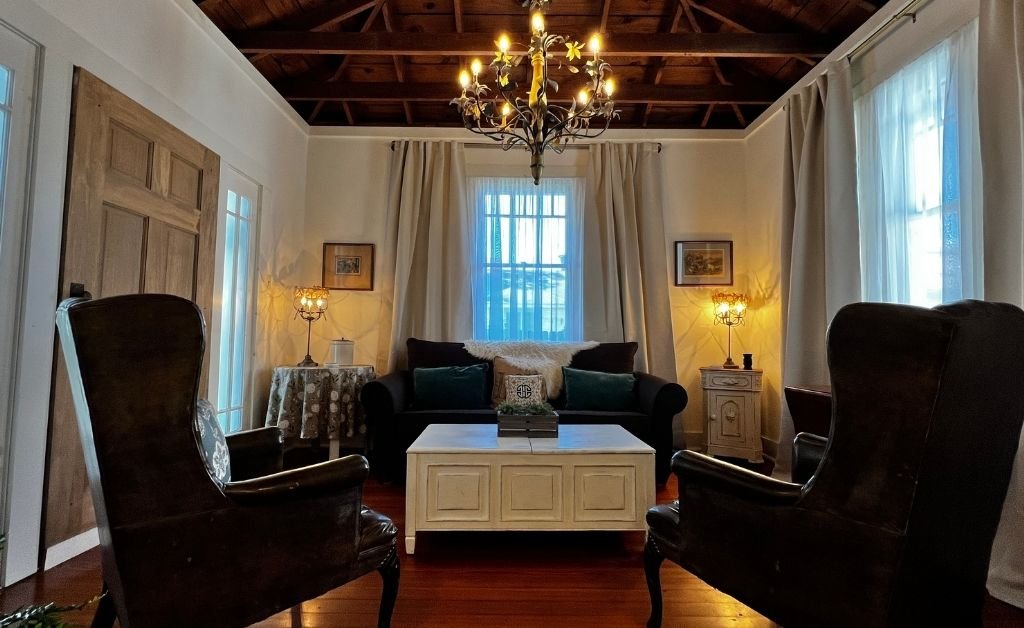
He built the house in 1922, a detail that carries both historical and personal significance, as the year also became the home’s address. Standing inside the rooms he once occupied, it is easy to imagine a time when Kenner was still taking shape, shaped by the railroad and by the immigrant communities that helped fuel the region’s growth.
“This is Sheriff Clancy, the longest tenured sheriff in Jefferson Parish. He built it in 1922, which is actually the address of the house. He was my great-grandfather.” — Andrée Dupépé
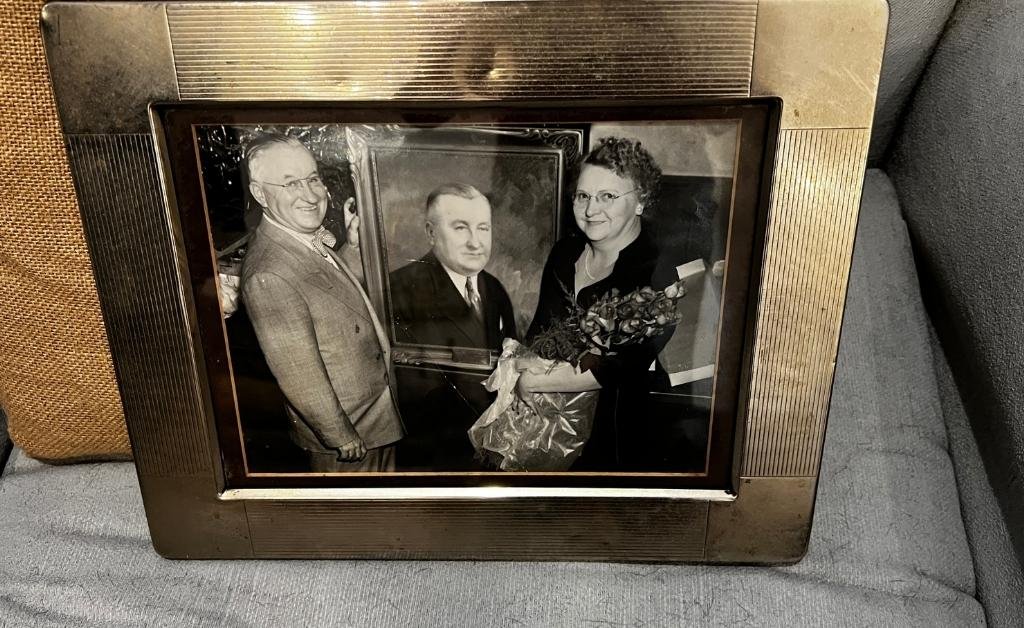
Though Andrée Dupépé never met him, his presence still lingers throughout the home. She described him as a man of his time, deeply involved in the community and remembered for his generosity.
“Back in the teens and 20s, it was a different day than now. But I think he was a good man, had a big heart.” — Andrée Dupépé
Kenner’s Railroad Roots Reflected Inside the Home
In the 1920s, Kenner’s identity was inseparable from the railroad. It was not only the economic lifeblood of the town, but a vital link between immigrant labor and the food systems that supplied New Orleans. Inside the Clancy House, a mural quietly honors that history.
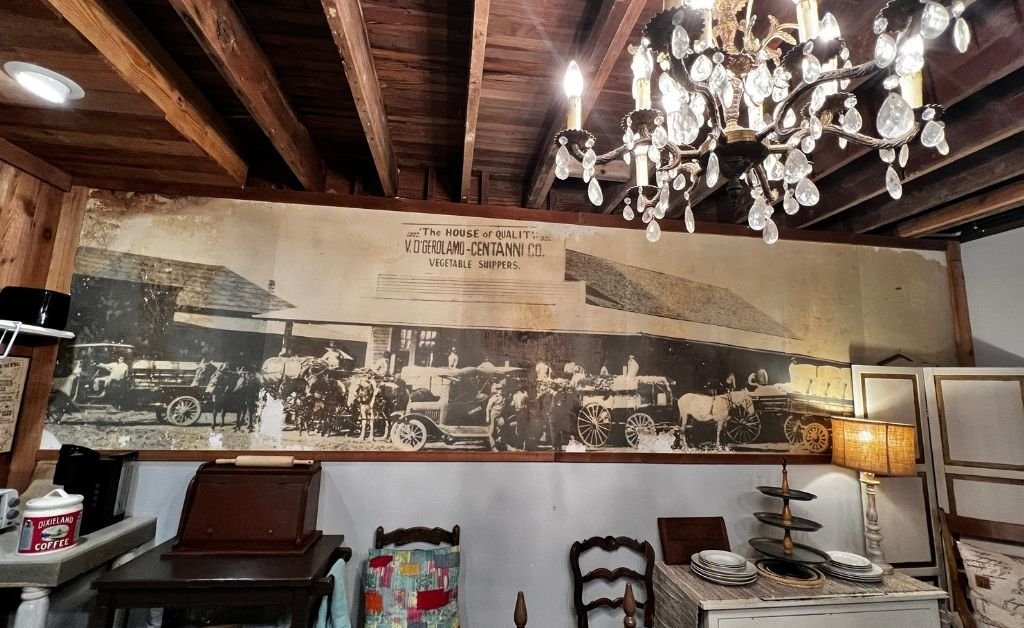
“This mural shows the immigrants. Kenner was mostly Italian and Irish immigrants, and they were the lifeline to all of the produce that would go to the city of New Orleans.” — Andrée Dupépé
The mural was added during a later chapter in the home’s life, when the property belonged to the city. When Andrée eventually reclaimed the house, it remained in place. She noted that the mural was already there when the house returned to her, placed by the city, and believes it was put there for a reason, as a tribute to Kenner’s founding communities.
One Property, Many Lives
Few homes experience as many transitions as the Clancy House, yet each chapter feels connected rather than fragmented. Sheriff Clancy lived here, with his office attached. Over time, the house continued to serve as a family home for generations.
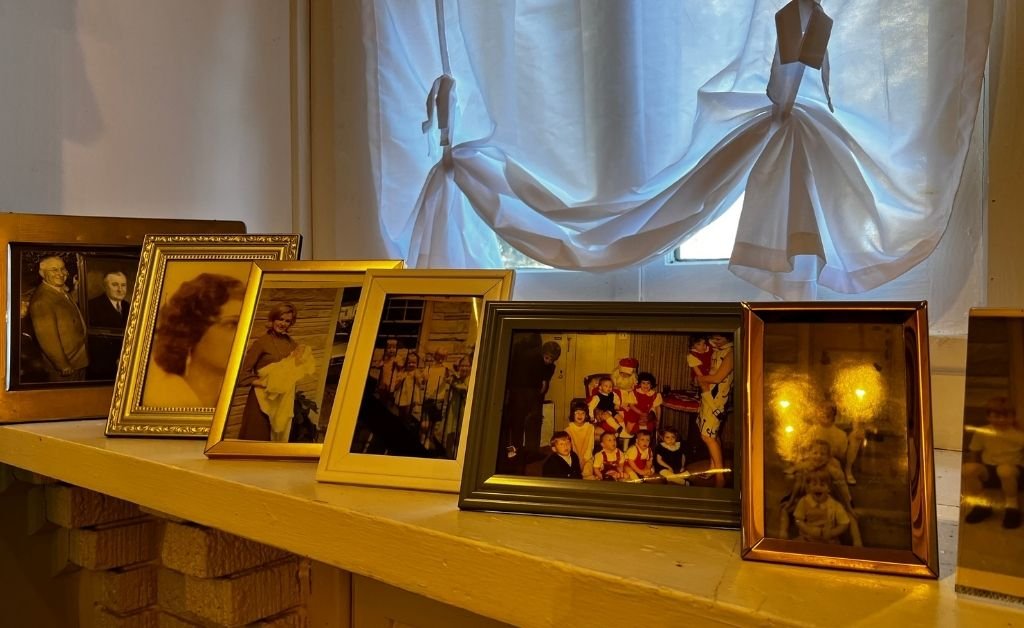
“My grandmother lived here, and my parents lived here, back in the day.” — Andrée Dupépé
A smaller structure on the property tells another story. Sheriff Clancy married the daughter of Kenner’s first mayor, and together their families built neighboring homes with a shared shed between them.
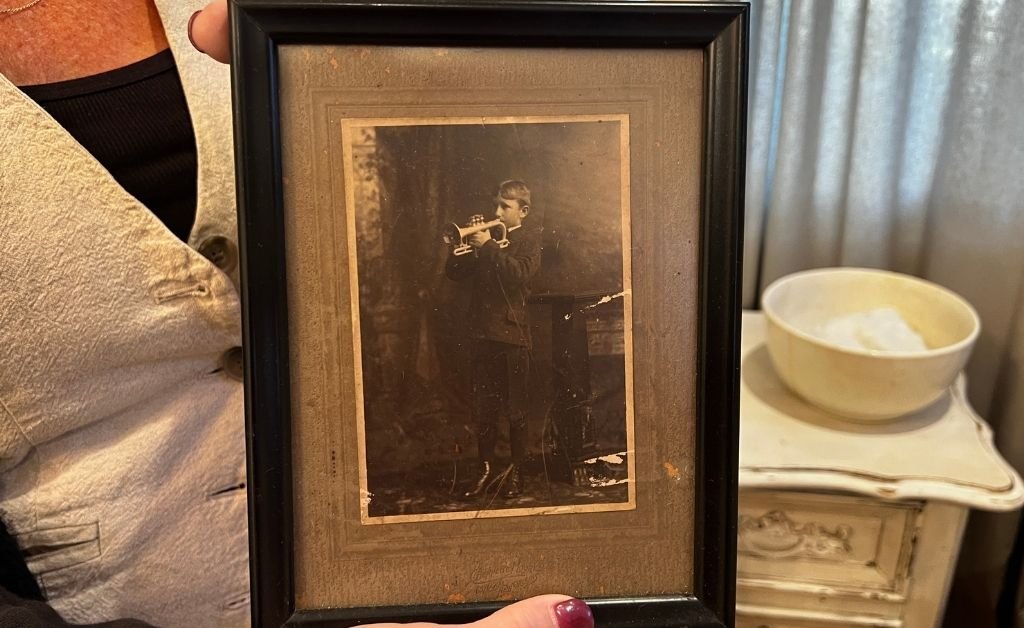
“That small shed was used as a food pantry, the first food pantry in Jefferson Parish. It’s not a food pantry anymore, but it’s still here.” — Andrée Dupépé
For Andrée, this history is personal. She was brought home from the hospital to this house, making it the place where her own life began.
“I was brought home from the hospital to this building.” — Andrée Dupépé
From Family Home to City Museum and Back Again
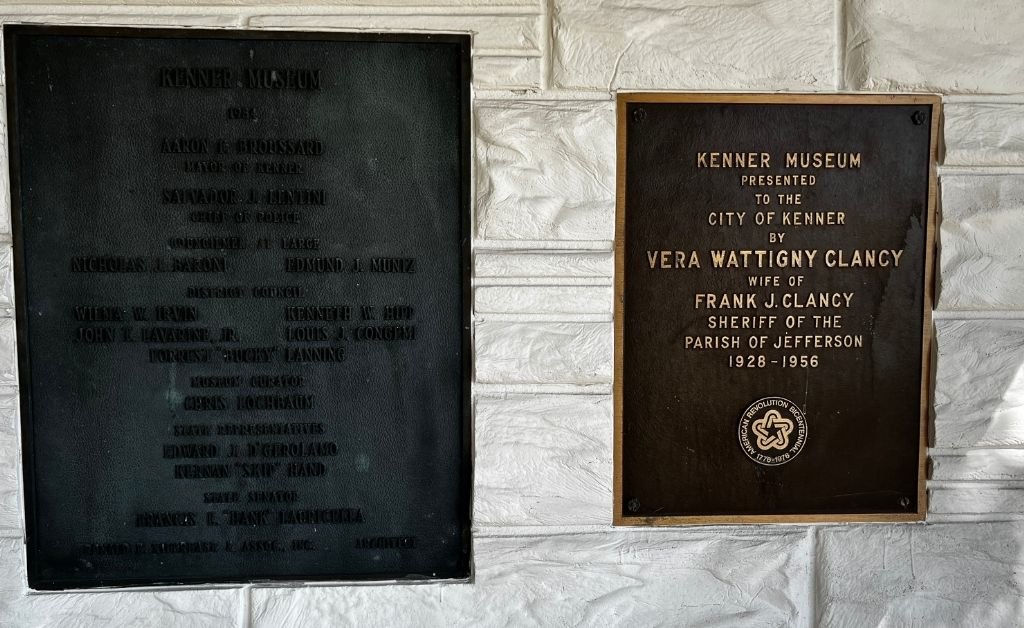
In the 1970s, Andrée’s grandmother donated the Clancy House to the city of Kenner, where it became the Kenner Museum. That chapter lasted until Hurricane Katrina. After the storm, the museum never reopened, and the property gradually fell into neglect.
“I just saw the property not being taken care of.” — Andrée Dupépé
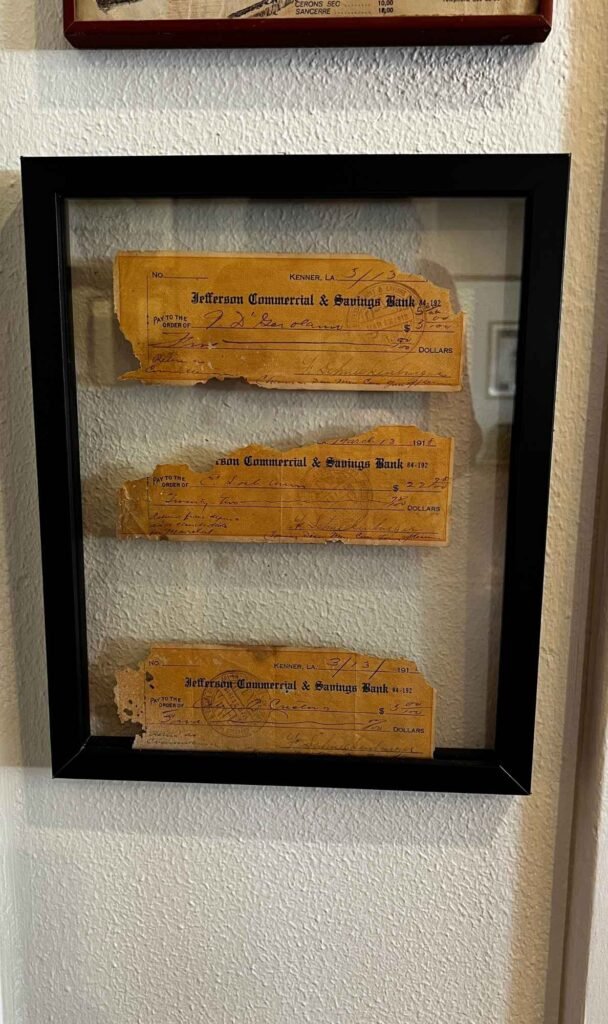
When Andrée went to City Hall to ask about the house, she learned the original donation included a stipulation: if the house was no longer used as a museum, it would return to the heirs. With that knowledge, she approached her family, and one by one, they entrusted the home to her care.
A Restoration Guided by Care and Intention
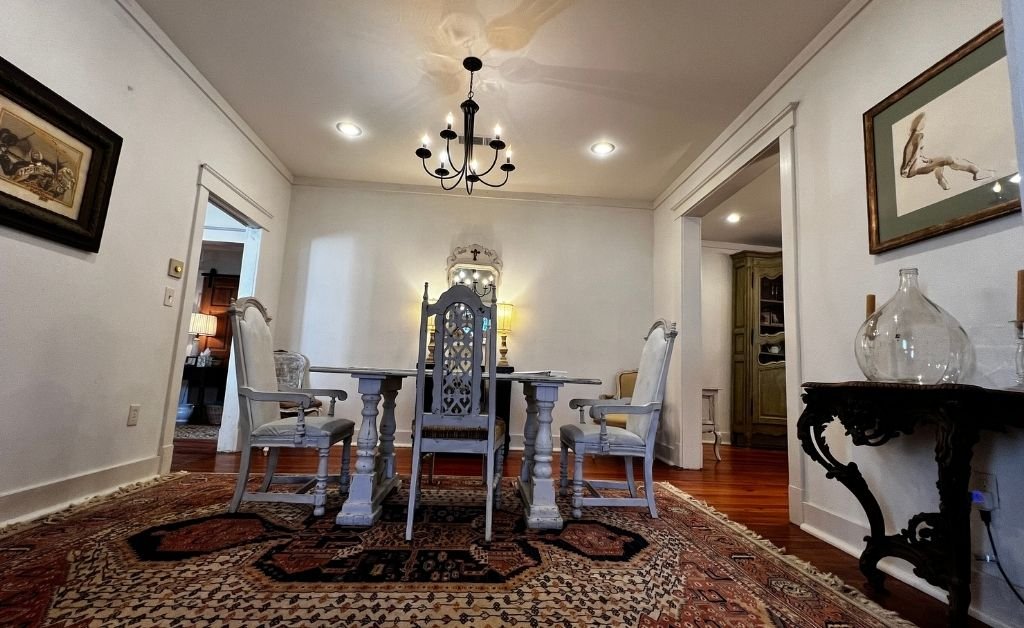
The restoration that followed was not driven by commercial ambition. It was a deeply personal effort, funded out of pocket and guided by careful, thoughtful decisions.
“Yes, it was a total passion project out of my own pocket.” — Andrée Dupépé
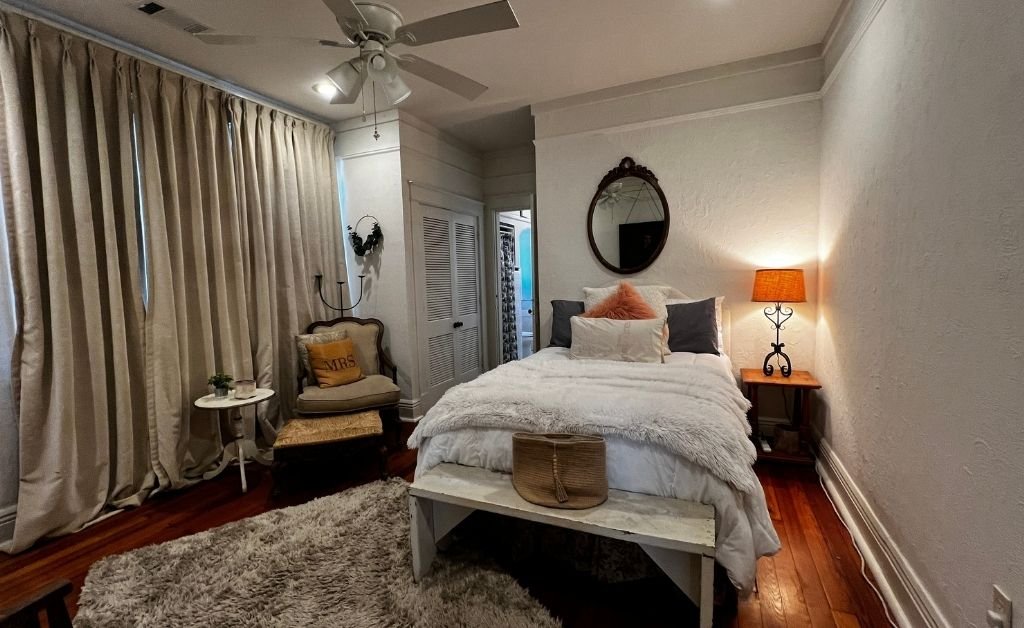
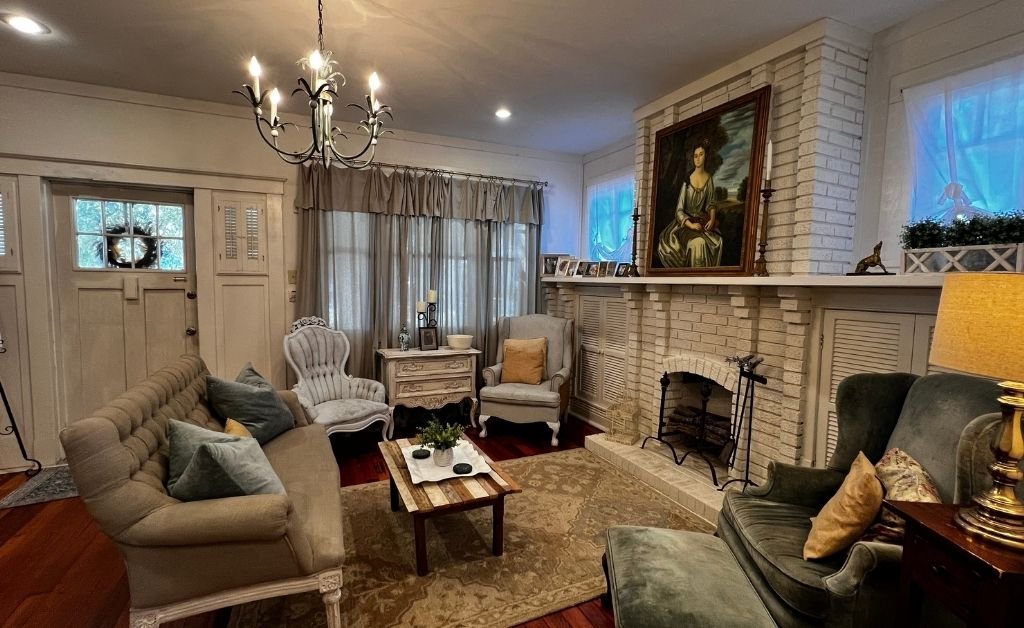
As I moved through the rooms, the house felt cohesive and lived-in, not staged. Antiques, vintage woodwork, and period details create a sense of continuity rather than recreation.
“I really did put a lot of thought into it and wanted it to feel like that.” — Andrée Dupépé
Some of those furnishings carry their own family connections. Andrée’s family has long been in the hotel business, and when one of their hotels was renovated, many antiques were being discarded.
“I said, I’ll take them.” — Andrée Dupépé
Reflecting on that moment, she added:
“Papa must have been looking down on me and helping me out a little bit.” — Andrée Dupépé
There is also a quieter detail woven into the restoration. Andrée, a professional singer, added that a lot of singing went into the work. Somehow, it fits. The house feels expressive, resonant, and alive.
When asked what she thinks her great-grandfather would say if he could see the house now, her answer was simple.
“I hope he would be proud.” — Andrée Dupépé
Before her father passed away, he offered his own affirmation.
“You done good, kid.” — Andrée Dupépé
The Clancy House Today in Historic Rivertown
Today, the Clancy House operates as a venue with an overnight option, a distinction that matters in historic Rivertown, where Airbnbs are not permitted.
Shelly Maxwell, the venue’s manager, has lived in Jefferson Parish her entire life and understands the rhythm of the community.
“It is a much smaller community. Everyone knows everybody. It’s very family-oriented.” — Shelly Maxwell
That sense of closeness is part of what draws people here, along with the balance Jefferson Parish offers.
“You’re just outside of the hustle and bustle of New Orleans. Close enough, but just far enough away.” — Shelly Maxwell
A Space Designed for Gatherings and Stays
The Clancy House is not a bed and breakfast and not an Airbnb. Instead, it occupies a category of its own.
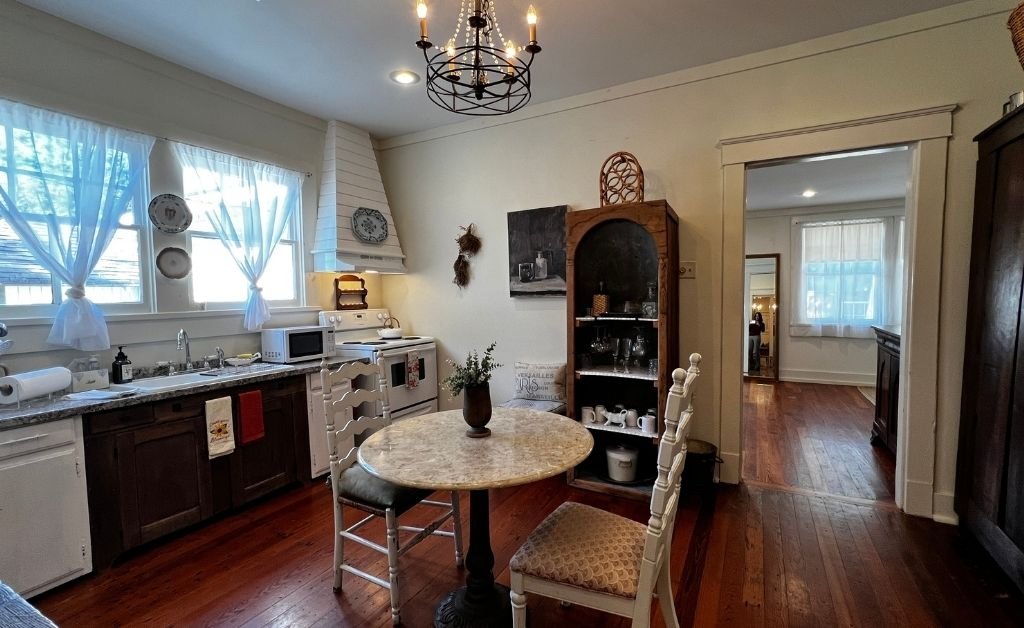
“We call ourselves a venue with an overnight option for a reason.” — Shelly Maxwell
Guests can rent the space for events or stay for one night or several. Wedding weekends are especially common, allowing families to stay together rather than traveling back and forth during busy celebrations.
“We’ve done up to four nights. It made it easier for a family instead of traveling back and forth.” — Shelly Maxwell
The experience is meant to feel welcoming rather than formal.
“We really love the visitor experience to be a home away from home. Something a little eclectic, a little New Orleans, but you’re not in New Orleans.” — Shelly Maxwell
Walkable Connections to Rivertown
Location is part of the experience. The Clancy House sits directly across from the levee on Reverend Richard Wilson Boulevard, also known as Third Street. It is a natural stop for anyone exploring Rivertown on foot.
“If you’re walking the levee or touring the area, you’re going to pass the Clancy House.” — Shelly Maxwell
At night, the lights illuminate the oak tree out front, and the house becomes part of the neighborhood’s evening rhythm. From here, visitors can walk to Rivertown’s restaurants, museums, event spaces, and Heritage Park with its small chapel just across the street.
“It’s just a great little area. And it’s really coming along beautifully.”— Shelly Maxwell
An Ongoing Story, Still in Use
The Clancy House does not present itself as a finished chapter. It is not preserved behind ropes or interpreted through plaques. It is open, occupied, and still being used in ordinary ways, which is what makes its history feel intact rather than staged.
During my visit, it was clear that the house has learned how to change roles without losing its identity. It has been a sheriff’s home, a family residence, a city museum, and now a venue with an overnight option. Each version added another layer instead of erasing the last.
What stands out most is how naturally the house fits into Rivertown today. It sits across from the levee, part of the daily walkways and neighborhood routines. People pass it on their way to parks, restaurants, and events. At night, the lights rise into the oak tree out front, and the house becomes part of the streetscape again, not an object set apart.
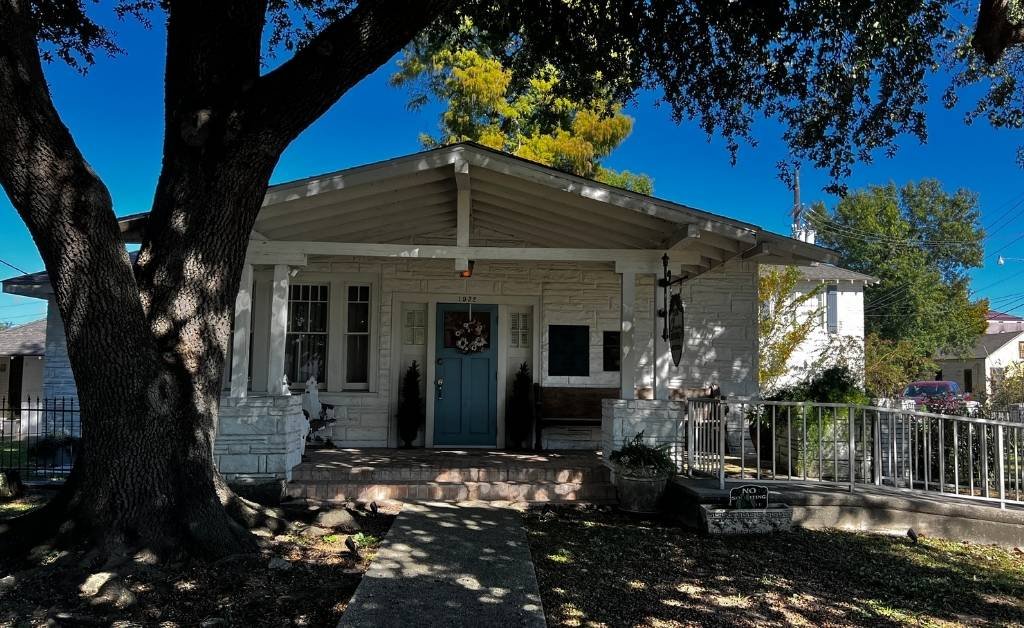
For travelers who want to experience Jefferson Parish at a slower pace, the Clancy House offers a way to stay rooted in the neighborhood rather than orbiting around it. Whether visiting Rivertown for an event, a walk along the levee, or simply time away from the pace of New Orleans, the house places guests inside the rhythm of the community instead of apart from it.
The Clancy House remains what it has always been: a working place in the life of Jefferson Parish, trusted with people’s time, gatherings, and memories, still quietly doing its job.
Experience Your Destination with Plannin
Travel is more than sightseeing—it’s about immersion. With Plannin, you can:

✅ Discover authentic adventures, culture, history & cuisine
✅ Unlock hotel deals worldwide at exclusive rates
✅ Book everything in one place—fast and hassle-free
Turn your next trip into a story worth sharing.
Plan your journey with Plannin today.
Stay Connected Anywhere with Saily eSIM
Traveling soon? Skip the hassle of buying local SIM cards and enjoy instant connectivity with Saily eSIM.
With Saily, you can:
- Activate mobile data in minutes—no physical SIM needed.
- Choose affordable plans in over 150 countries.
- Keep your WhatsApp, contacts, and number without switching.

Whether you’re exploring cities or remote getaways, Saily makes staying online easy and affordable.
Get your Saily eSIM now and travel worry
Read More:
The Caldwell House Bed and Breakfast in Historic Abbeville
The Dover House in Florien: A Living Museum Airbnb
A Stay at Train Wreck Inn: A Vintage Train Car in Louisiana