Oakland Plantation Toys and Memory: Elvin Shields’ Wire Art Legacy
Share This Post
This post may contain affiliate links, which means I may earn a small commission from purchased products at no additional cost to you.
Table of Contents
On the banks of Louisiana’s Cane River, history whispers through oak trees and rusted wire, twisted into toys, passed through generations, and preserved by one man whose memory is as sharp as the steel he bends. Inside a former slave cabin at Oakland Plantation, I met Elvin Shields, a mechanical engineer turned folk artist, cultural preservationist, and living vessel of a rarely told story.
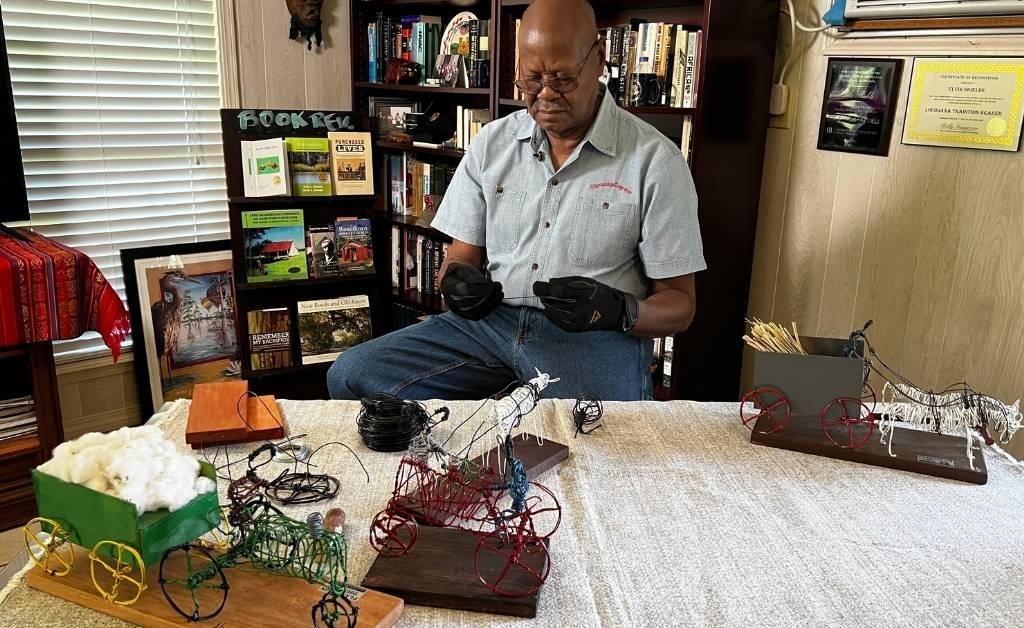
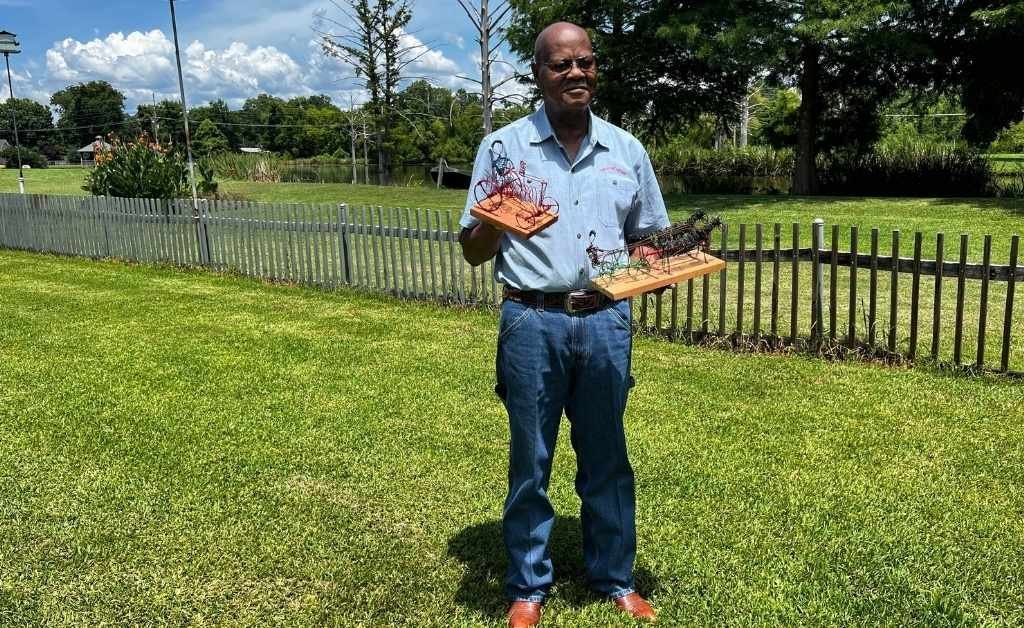
Elvin Shields displays one of his handcrafted wire plantation toys.
Elvin does not just make toys. He sculpts memory that is personal, painful, joyful, and rooted in a past many avoid. His work tells the story of plantation children who made do with scraps, creating their own playthings from salvaged wire, corncobs, and imagination. In Elvin’s hands, that heritage takes shape again.
Childhood in Wire: A Craft Born of Necessity
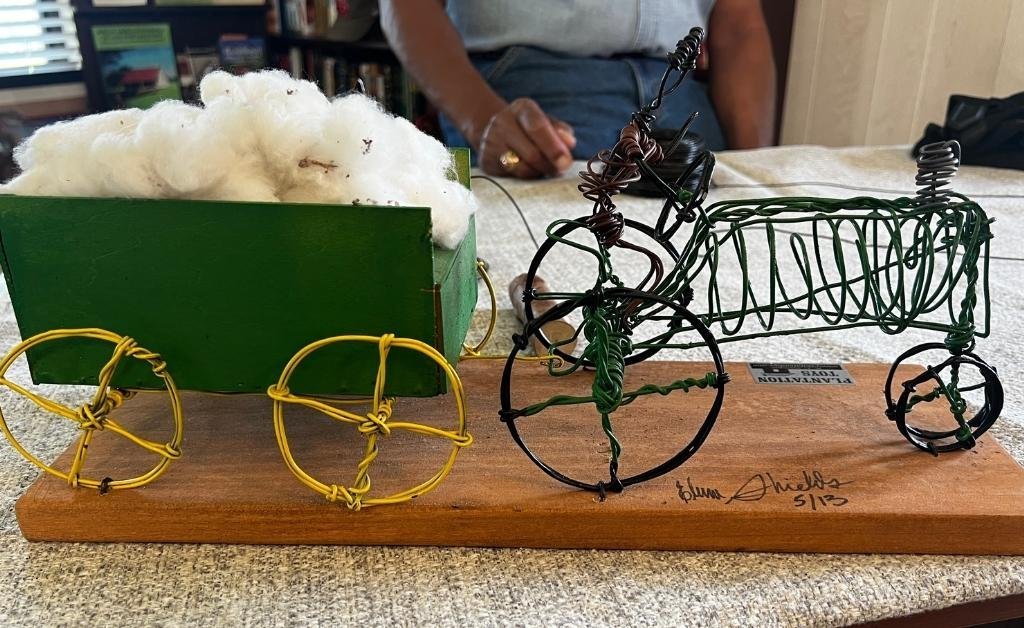
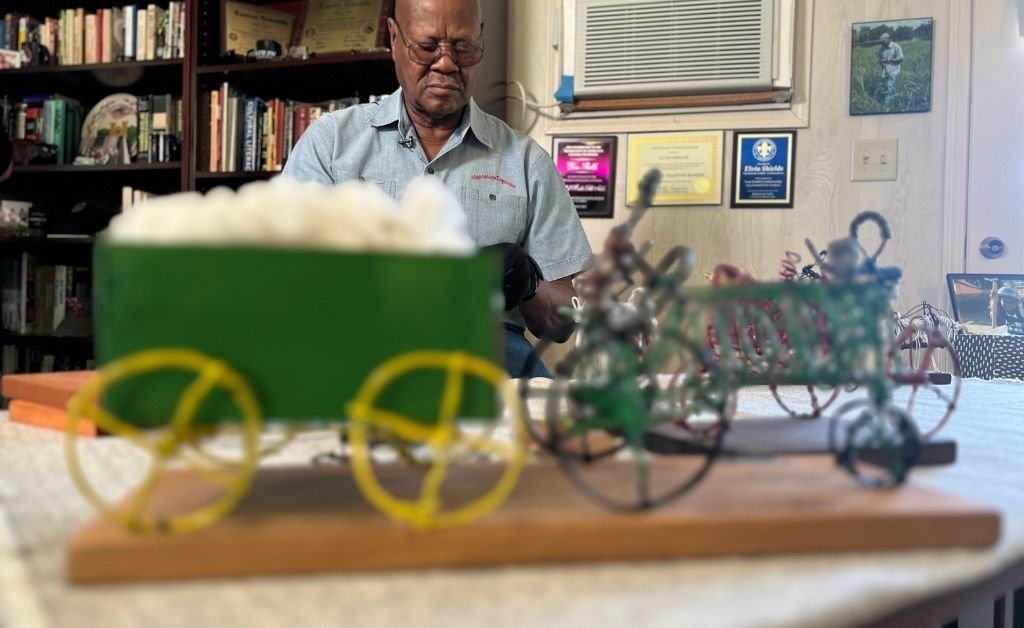
A cotton-filled wagon and tractor made from salvaged wire recall scenes from Oakland Plantation.
As Elvin twisted 16-gauge steel into a tiny wagon, I watched a scene unfold. It felt like a ritual and also like an act of resistance. These were not just toys; they were cultural artifacts born from deprivation and ingenuity.
“We didn’t have any money. Toys cost money. So you’d sit down and decide, what do you want to make? ” — Elvin Shields
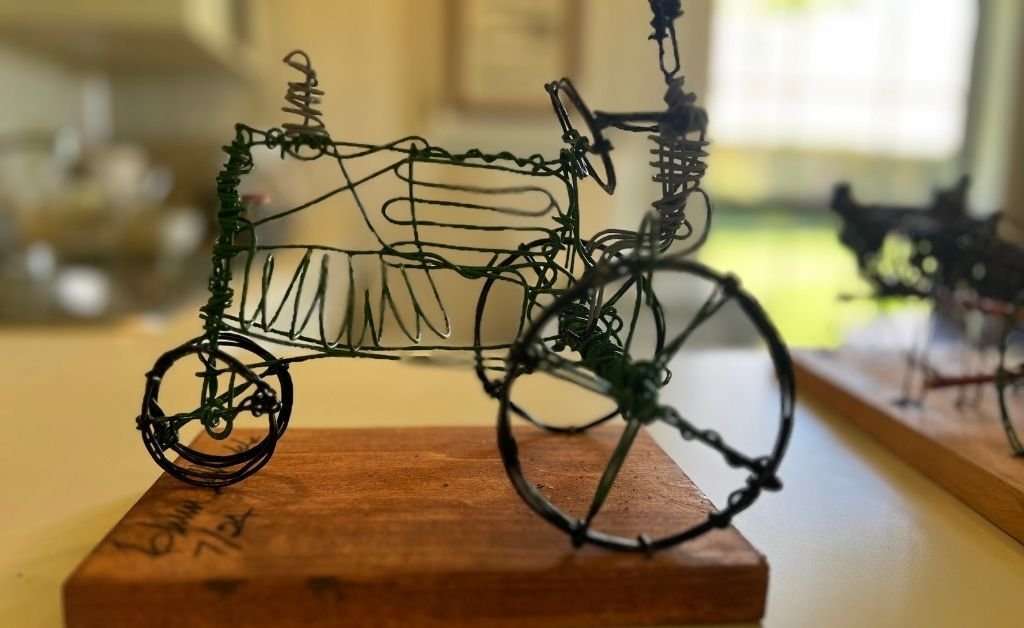
One of Elvin’s early designs, this wire tractor captures the resourcefulness that shaped his youth.
This knowledge was passed from hand to hand on the plantation.
“My brother taught me how to make long toys. And my older brother taught him. We were all on the plantation together, uncles, cousins, brothers. We lived there generation after generation, and we just carried this on.” — Elvin Shields
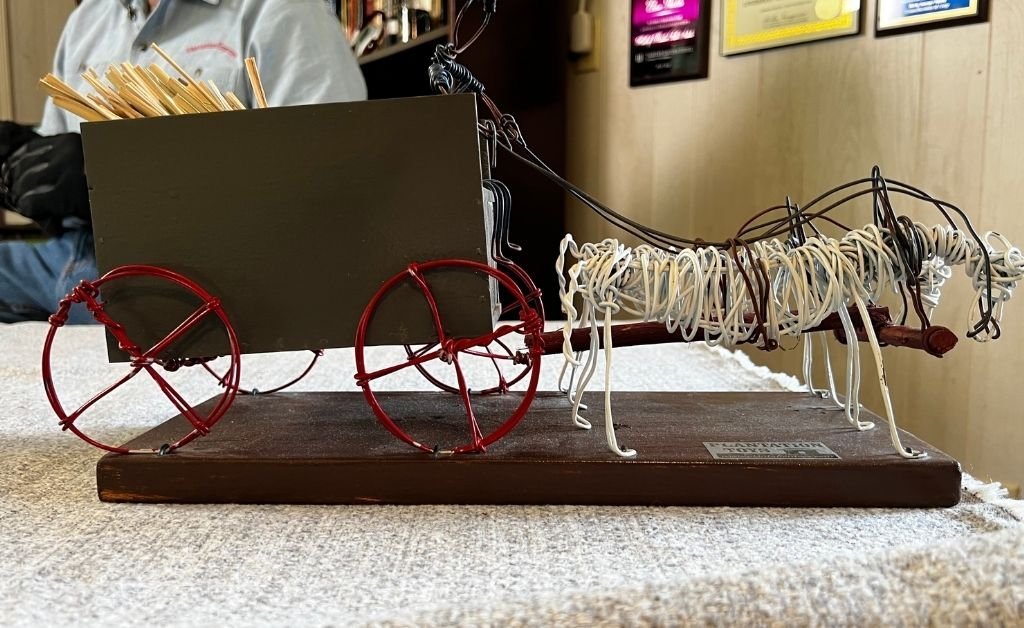
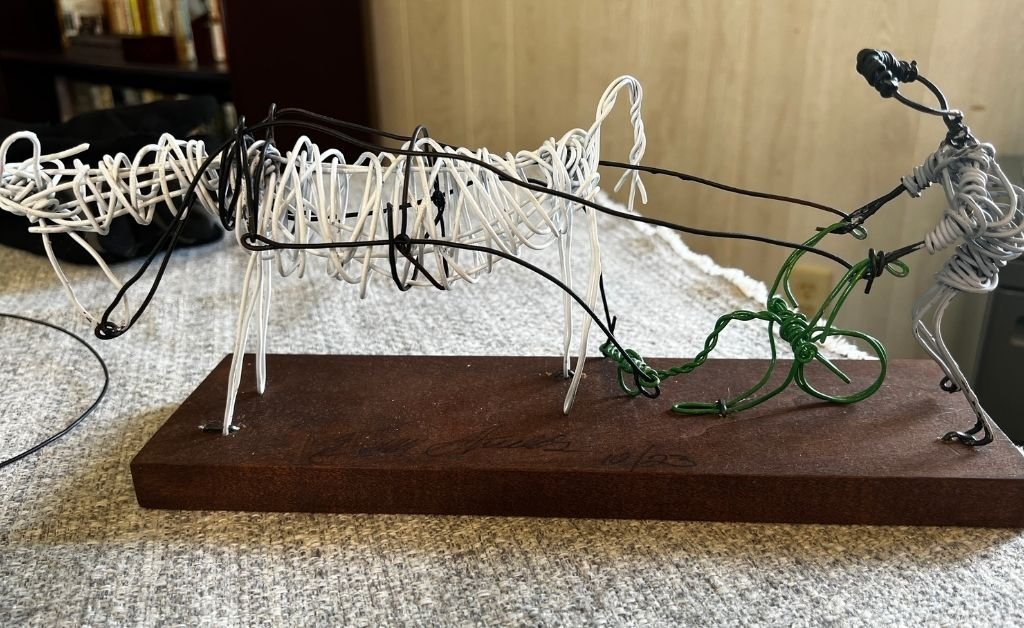
This mule and wagon scene re-creates the everyday images children once transformed into play.
Children used what they had, and they made what they dreamed.
“We would make push cars and corn cob dolls for the little sisters. We’d do all kinds of stuff. Slingshots, pop guns. If you can imagine it, you can do it.” — Elvin Shields
These toys were not purchased. They were earned with imagination and wire.
Oakland Plantation: From Cabin to Museum
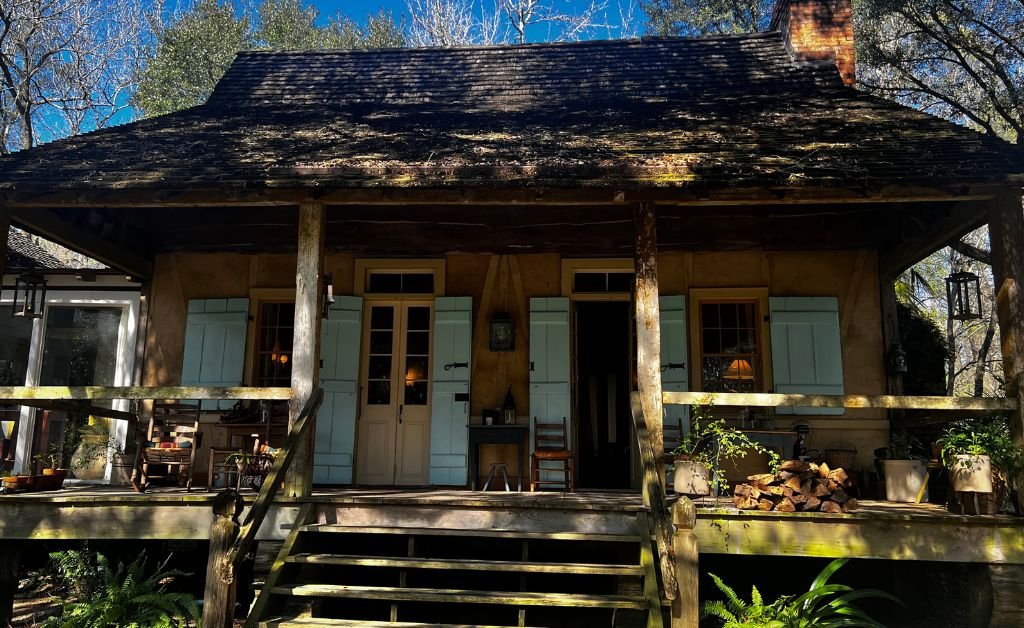
The restored cabin where Elvin Shield grew up.
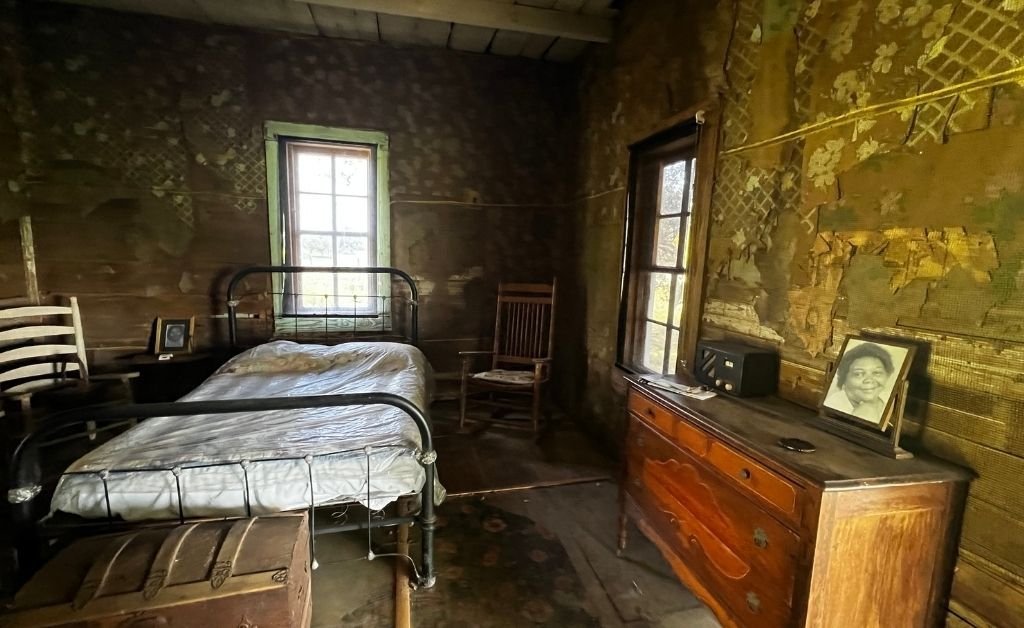
Elvin took me to his childhood home, a single-room cabin built in 1860. It once housed enslaved people, and later, sharecroppers like his parents. He restored it with reverence, and today the public can walk through this intimate space, which is part of the Cane River Creole National Historical Park in Natchez, Louisiana.
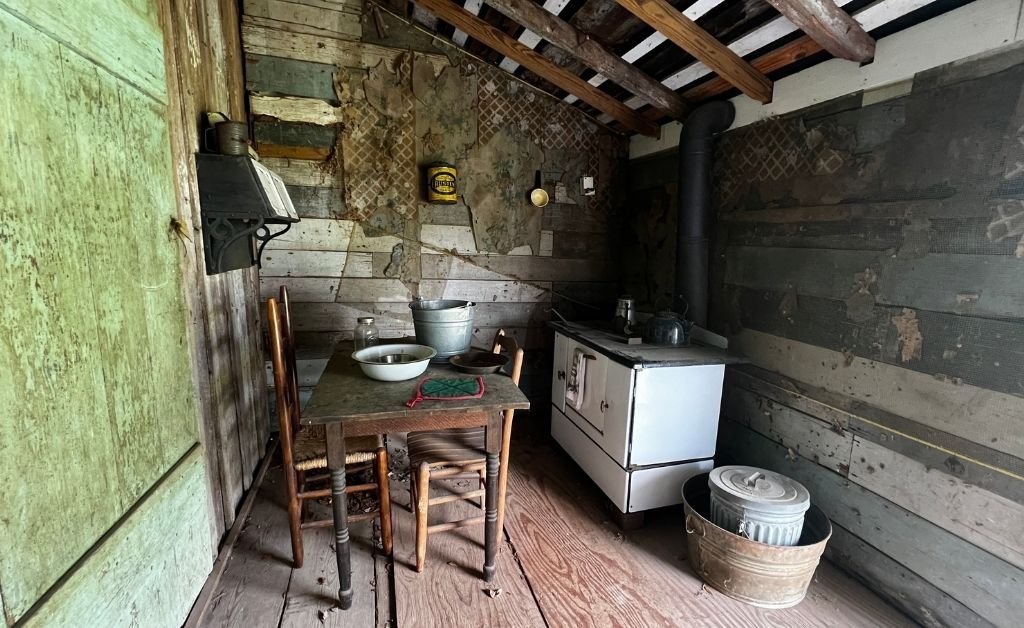
The kitchen corner of Elvin Shields’ restored childhood cabin.
Inside, the past is palpable. Cypress rafters, worn wooden floors, and the ghostly sense of families who lived, loved, and labored here are all present in the structure. These families lived under the looming shadow of the “big house,” a Creole raised cottage built by enslaved hands using cypress timber and bousillage-filled walls.
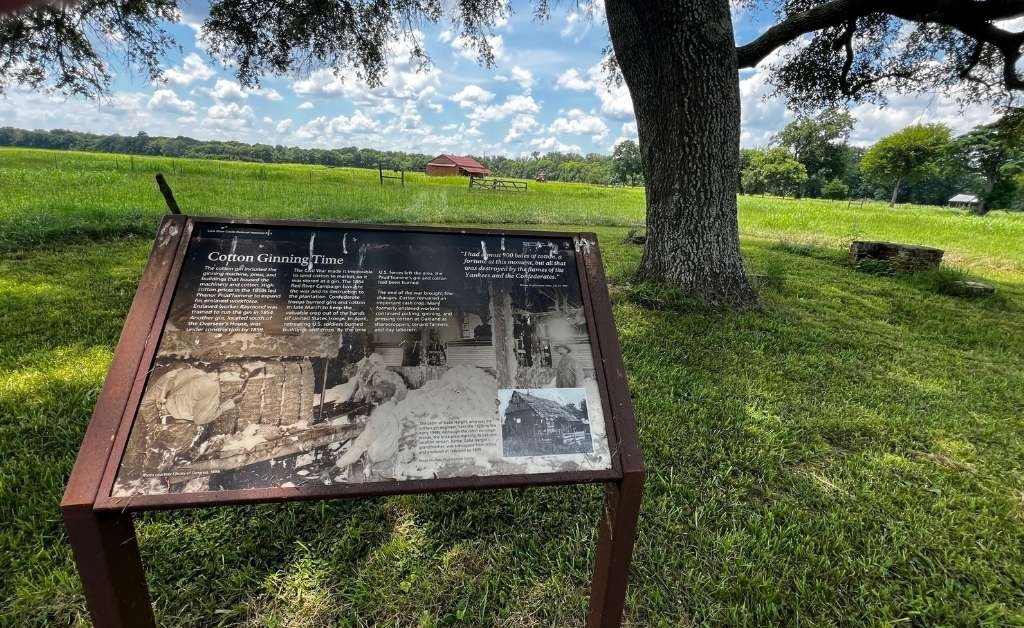
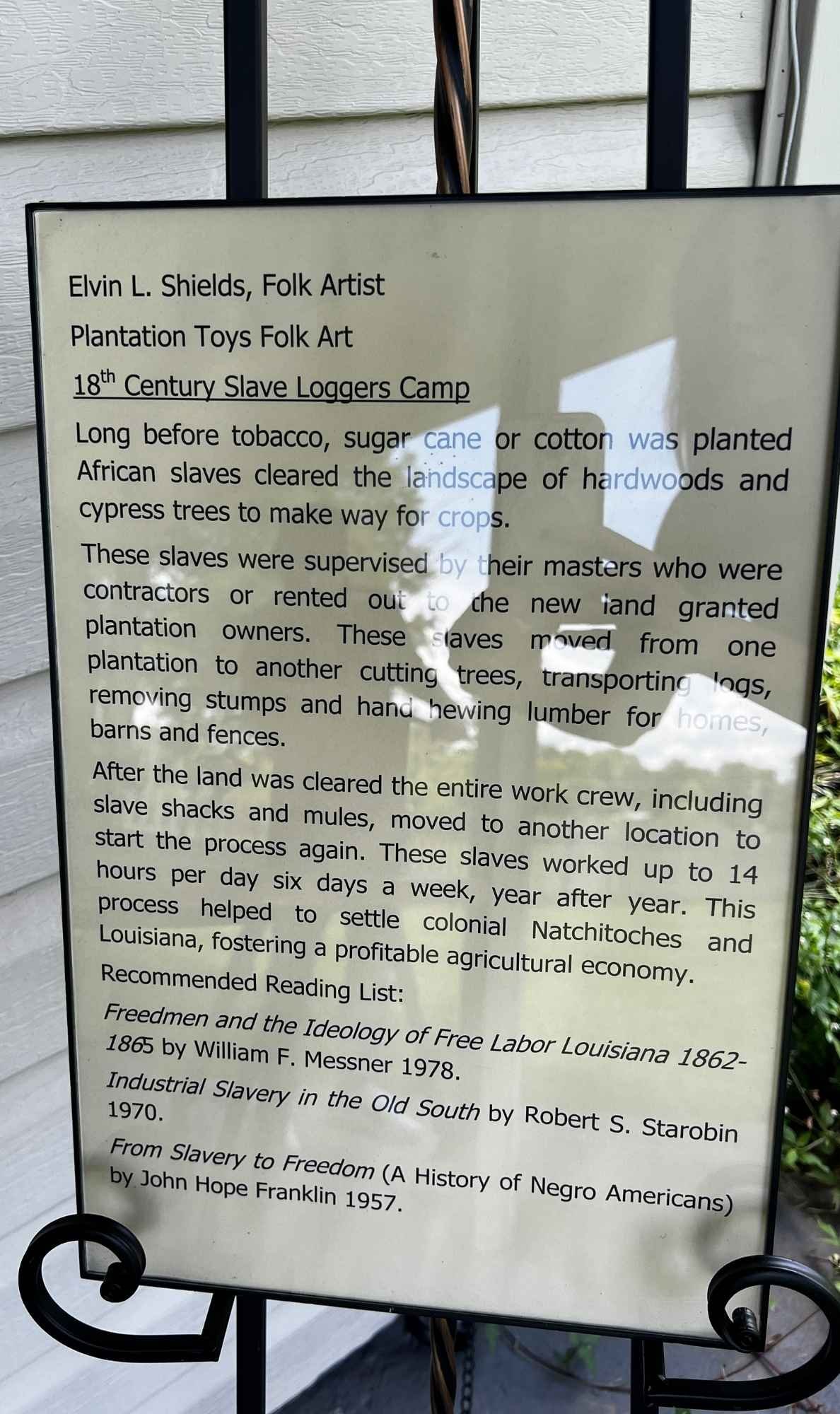
Signage tells the story of labor and life beyond cotton at Oakland Plantation.
“There was a lot more going on on the plantation than just the cotton. People were doing a lot of things. We had art.” — Elvin Shields
This Creole cottage stood at the heart of Oakland Plantation life for nearly two centuries.
For many people who lived on plantations, artistic expression was not decorative. It was a means of survival. Art preserved dignity, and it offered escape.
The Meaning Behind “Plantation Toys”
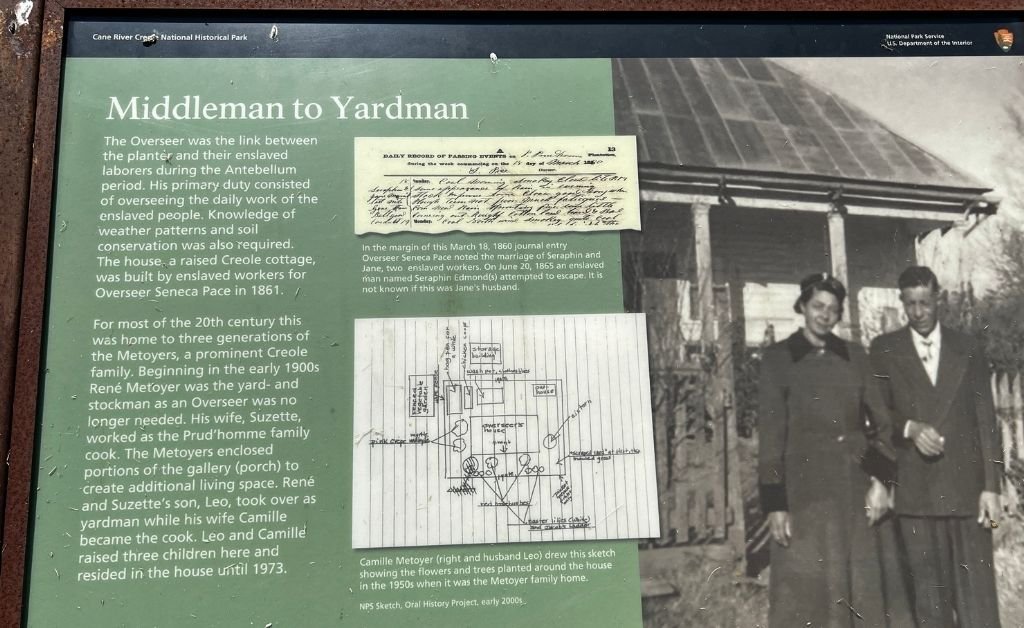
Stories like those of the Metoyer family reflect how roles evolved across generations at Oakland Plantation.
Elvin does not shy away from the loaded word “plantation.” He embraces it. He names it because, to him, it is not a trigger. It is the truth.
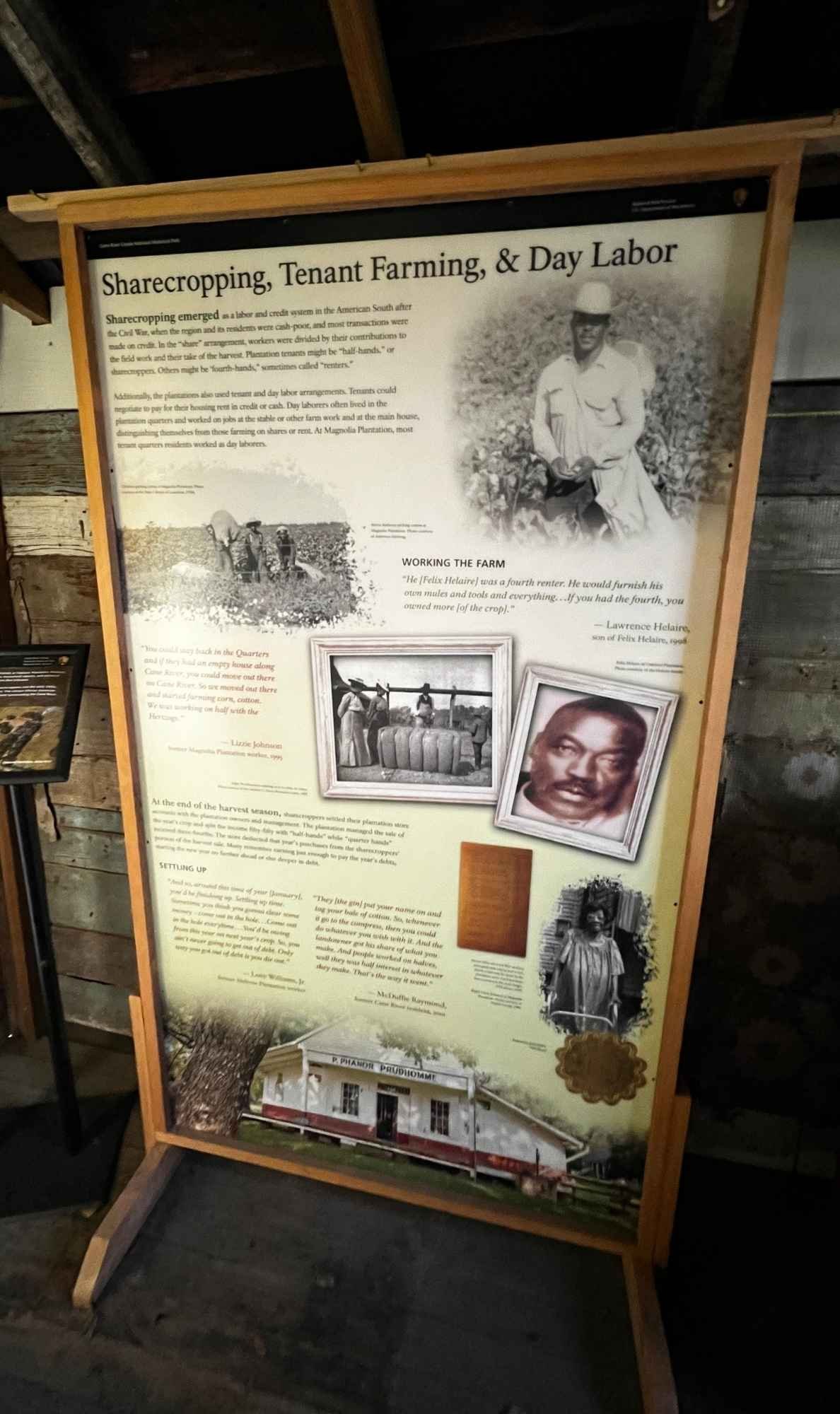
Panel explains how life continued after slavery through systems like sharecropping and tenant farming.
“We call it plantation toys. Most people don’t want to hear about a plantation. In their mind, that’s a bad word. And I say no. That’s how it all got started from the plantation.” — Elvin Shields
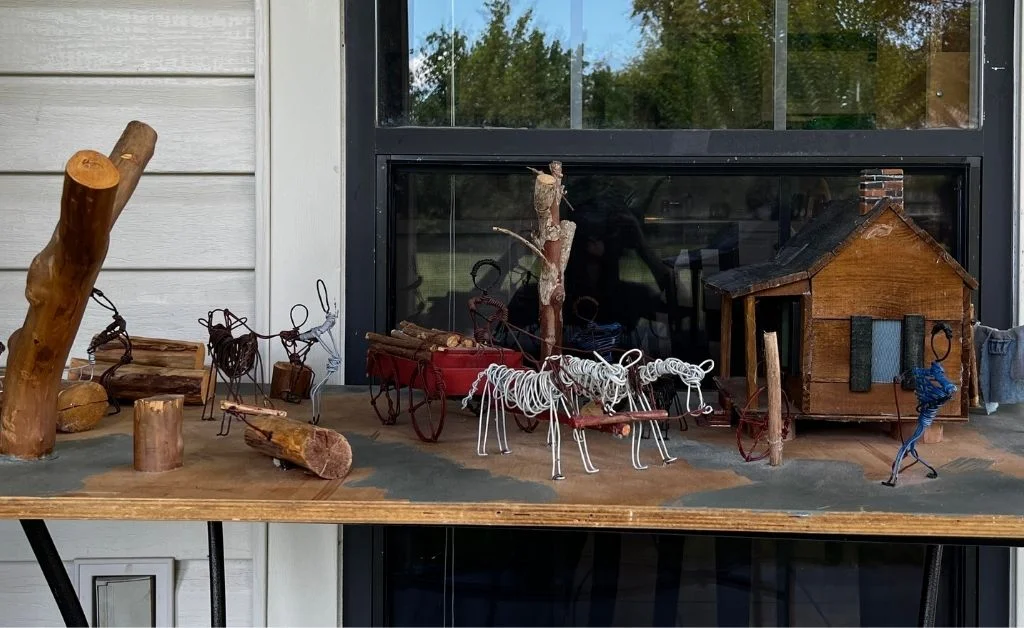
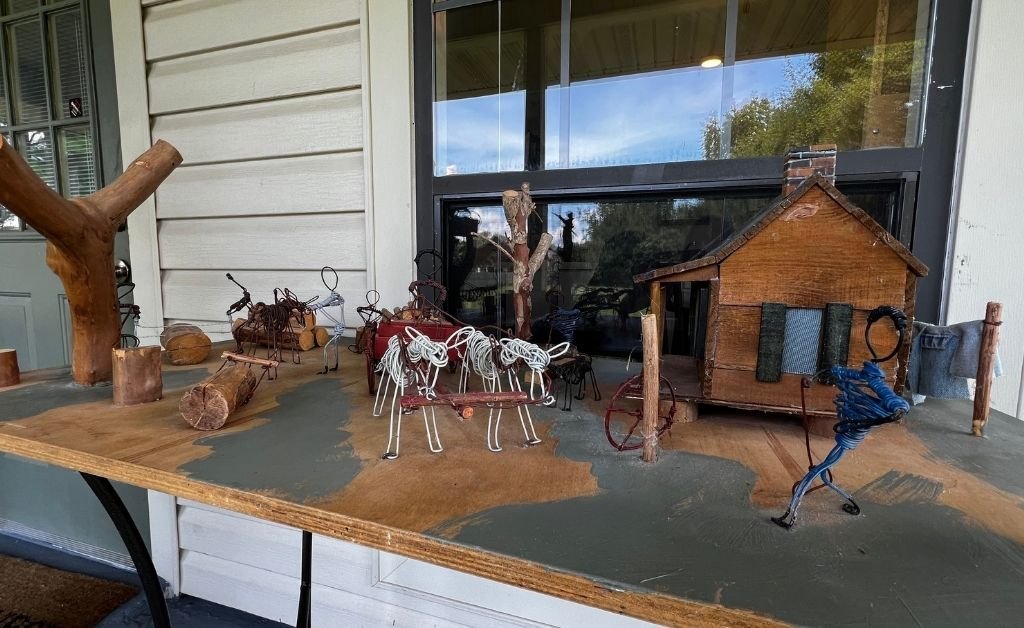
Elvin’s dioramas transform wire and wood into memory, telling stories of labor, family, and place.
The toys depict the lives people lived. They show not only labor, but also community and daily rhythms.
“We were doing mules and traders and wagons, the things that we saw. But no one is doing this stuff. This stuff takes you directly to the plantation.” — Elvin Shields
Elvin’s crafts preserves the spirit of a vanishing past.
Elvin has created more than 400 wire toy sculptures, and each one tells its own story. But this is not about profit.
“If I went out and tried to peddle these all over the place, it’d be like you’re losing the reason you’re doing this. This is a culture thing.” — Elvin Shields
Teaching the Next Generation
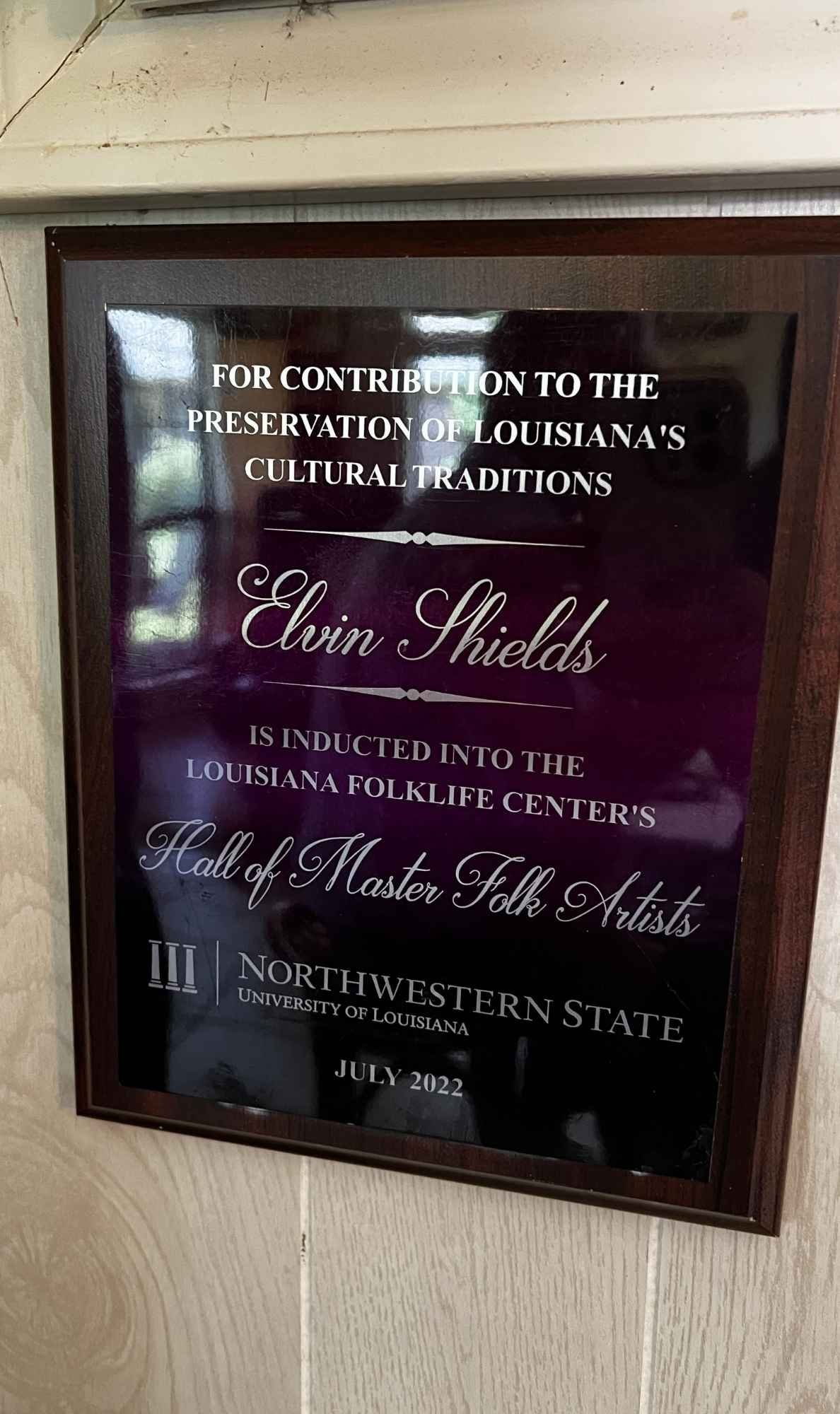
Elvin Shields’ Hall of Master Folk Artists award plaque from Northwestern State University
After leaving the plantation in 1967, Elvin pursued a career as a mechanical engineer. After retirement, he returned not only to the land but also to his legacy. Now, as a volunteer with the U.S. Park Service, he teaches young people how to create wire toys and keeps the tradition alive.
One of Elvin’s many wire scenes capturing daily labor on the plantation.
“I’ve done over 400 of these. I’ve given away over 200. I’ve loaned out to museums and libraries, maybe another 25 or 30 or 40. I’ve sold maybe 150.” — Elvin Shields
Elvin Shields presents a handcrafted wire sculpture to Karen LeBlanc during her visit.
During my visit, he showed me a wire toy vignette. It was a scene of plantation life rendered in steel. Then, he handed me a gift, a wire sculpture of a woman, perfectly balanced and elegant in her stance. That toy now sits on my desk and reminds me that history is handcrafted.
Art, Memory, And Misconception
Elvin is passionate about honoring all of the artists who came before him, not only the famous ones like Clementine Hunter, the folk art painter born at Melrose Plantation. Elvin was born there too, and he is quick to correct the idea that she was the only one.
“All over the world, people hear about Clementine and honor folk art. But people are under the impression that she was the only person who grew up on a plantation and did anything in the arts. No, there were many people doing many things. People need to know about it. They need to let their kids know.”— Elvin Shields
Elvin stands where history lives, holding the stories he shaped by hand.
His mission is about preservation, but it is also about correction. He is reclaiming a broader history, one twisted wire at a time.
Why Elvin Shields’ Legacy Matters
He brings memory to life with wire, each piece shaped by hand and history.
Inside a one-room cabin on a historic plantation, Elvin Shields is twisting steel into stories. He is reviving the culture of enslaved and sharecropping families through the humble medium of toys.
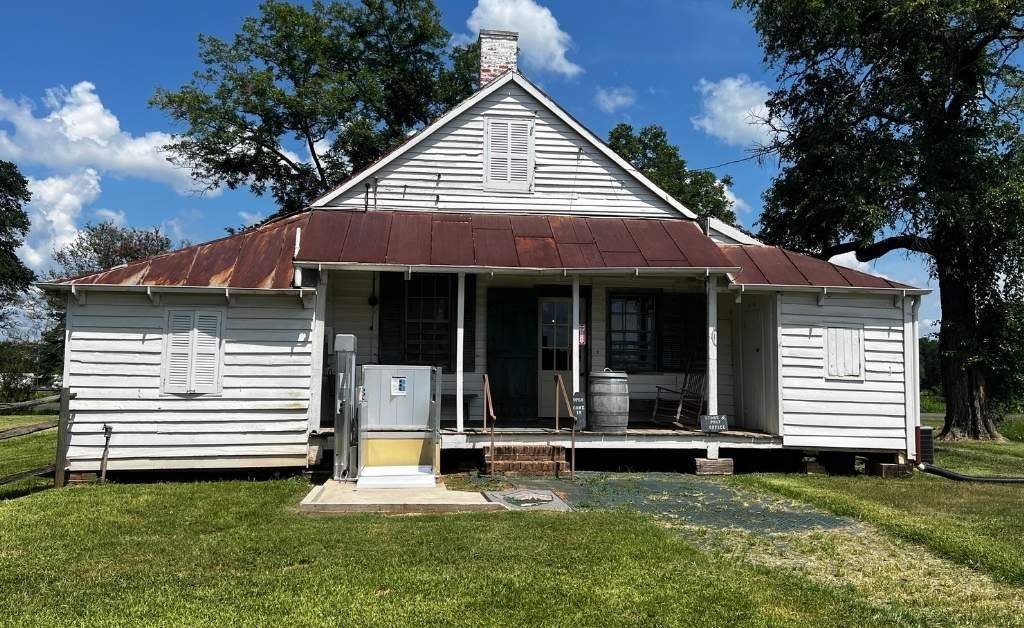
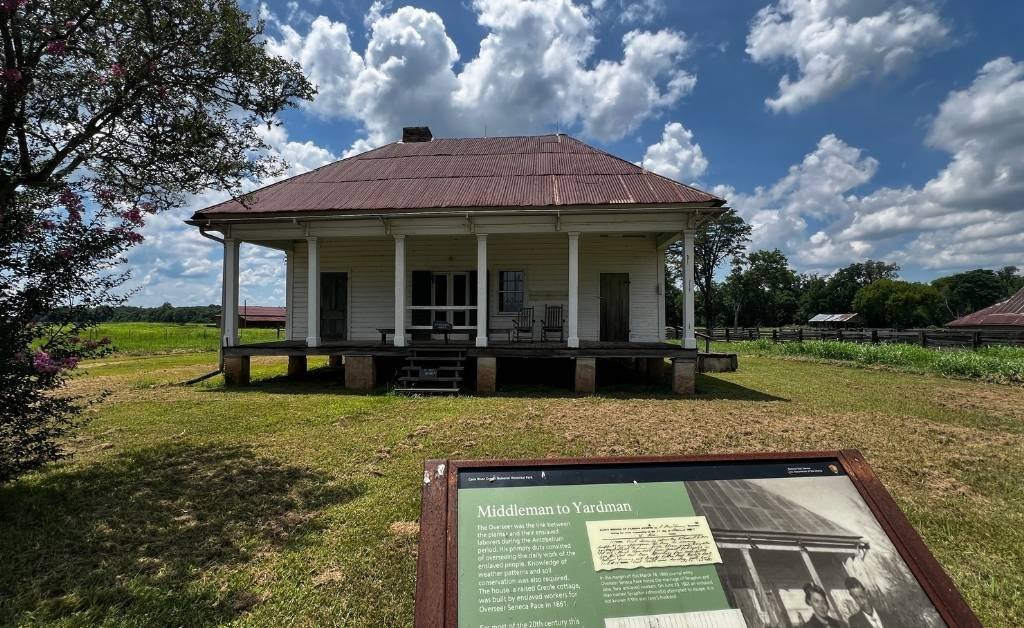
This former overseer’s house now helps tell the fuller story of plantation life through generations.
His art challenges silence, and it invites discomfort. It asks us to confront the word “plantation,” not as a single narrative of suffering, but as a complex story of survival, community, and creativity.
This panel connects Elvin’s wire art to a deeper history of labor, land, and legacy in Louisiana.
In a world that often sanitizes history, Elvin’s work does not simply ask us to remember. It asks us to feel.
Experience Your Destination with Plannin
Travel is more than sightseeing—it’s about immersion. With Plannin, you can:
✅ Discover authentic adventures, culture, history & cuisine ✅ Unlock hotel deals worldwide at exclusive rates ✅ Book everything in one place—fast and hassle-free